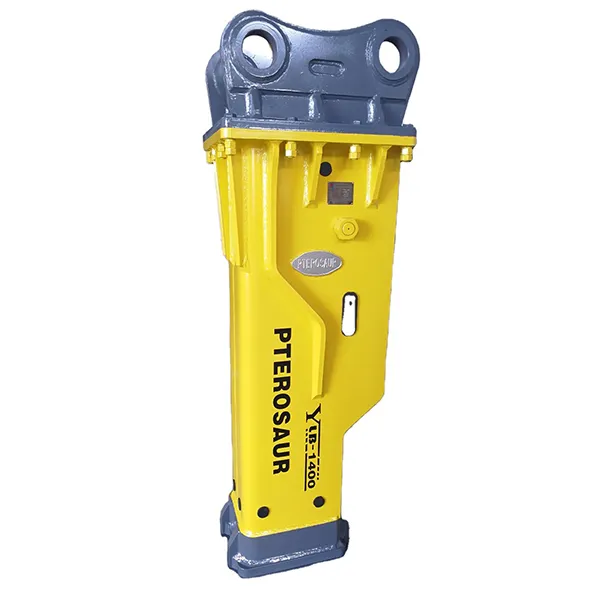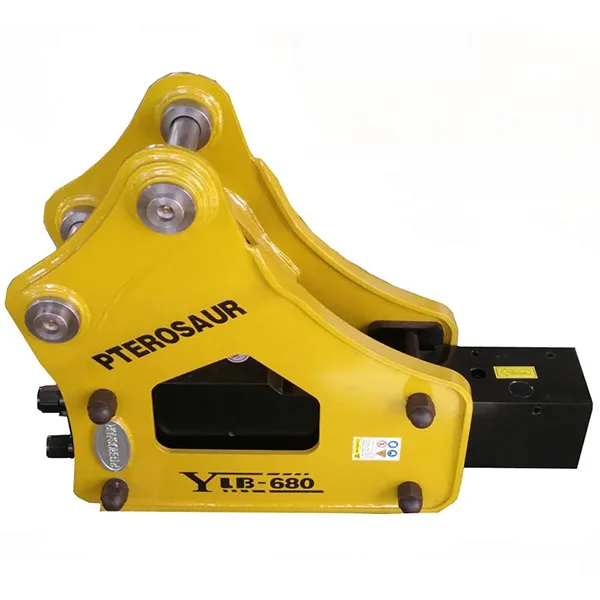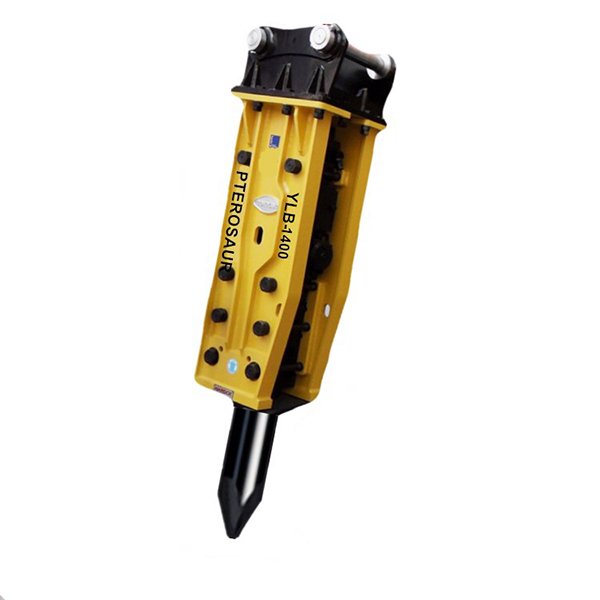
Hydraulic hammers, also known as hydraulic breakers, are powerful tools used in construction, demolition, and mining. These robust attachments rely on hydraulic pressure to deliver impact force, breaking down rocks, concrete, and other materials. Let’s explore the essential components that make up a Hydraulic hammer:
1. Front Head (Tool Holder):
The front head, also called the tool holder, is the business end of the hydraulic hammer. Here’s what you need to know about it:
- Function: The front head holds the Chisel(moil point) or other tool attachments.
- Design: It features a robust structure to withstand the impact forces generated during operation.
- Compatibility: Different front heads accommodate various tool sizes and shapes.
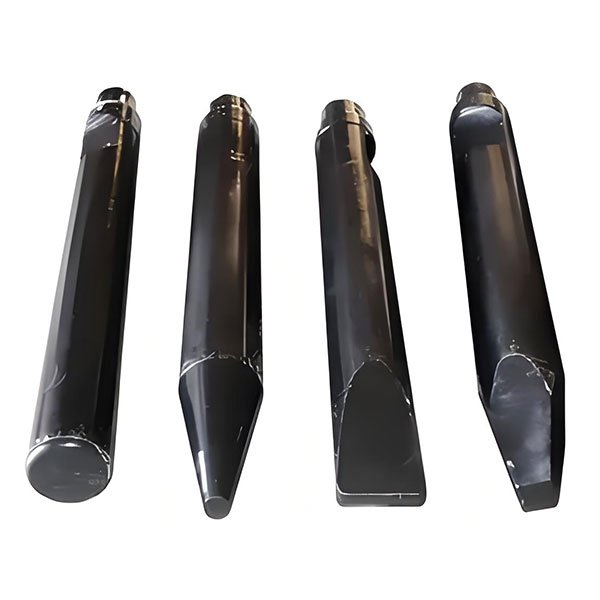
2. Chisel (Moil Point):
The chisel, also known as the moil point, is the actual striking element. Key details about the chisel:
- Shape: Typically pointed or wedge-shaped.
- Material: Made from hardened steel to withstand repeated impacts.
- Application: Chisels are ideal for breaking hard materials like rock and concrete.
3. Pistons and Cylinders:
The hydraulic hammer’s internal mechanism relies on pistons and cylinders:
- Pistons: Move back and forth within the cylinder, generating the striking force.
- Cylinders: House the pistons and control their movement.
- Hydraulic Fluid: The interaction between pistons and hydraulic fluid creates the impact energy.
4. Seals and O-Rings:
Seals and O-rings play a crucial role in maintaining hydraulic integrity:
- Seals: Prevent hydraulic fluid leaks.
- O-Rings: Seal gaps between moving parts.
- Quality: High-quality seals ensure efficient operation and prevent contamination.
5. Wear Plates and Bushings:
These components protect the hammer from wear and tear:
- Wear Plates: Positioned where parts rub against each other.
- Bushings: Reduce friction and provide stability.
- Regular Inspection: Regularly check and replace worn plates and bushings.
6. Hydraulic Hoses and Fittings:
The hydraulic system relies on hoses and fittings:
- Hoses: Transport hydraulic fluid between components.
- Fittings: Connect hoses to various parts.
- Maintenance: Inspect hoses for damage and ensure proper connections.
7. Valves and Control Mechanisms:
Valves regulate hydraulic flow and pressure:
- Control Valve: Adjusts the hammer’s impact intensity.
- Safety Valve: Prevents over pressure.
- User Controls: Operators adjust settings using control levers.
Conclusion:
Understanding the different parts of a hydraulic hammer is essential for efficient operation, maintenance, and safety. Whether you’re using a hydraulic hammer for demolition, quarrying, or construction, each component plays a vital role. Regular inspections, proper maintenance, and quality replacement parts ensure optimal performance.
Remember, investing in a reliable hydraulic hammer and caring for its components pays off in productivity and longevity.