Exploring Its Power and Applications
Introduction
When it comes to demolition, mining, and construction, one common question arises: “Will a hydraulic hammer break rock?” The short answer is yes—hydraulic hammers, also known as hydraulic breakers, are powerful tools designed to fracture and break through tough materials like rock, concrete, and asphalt. But how effective are they, and what factors influence their performance? This article delves into the mechanics, applications, and efficiency of hydraulic hammers in rock-breaking tasks.
How Does a Hydraulic Hammer Work?
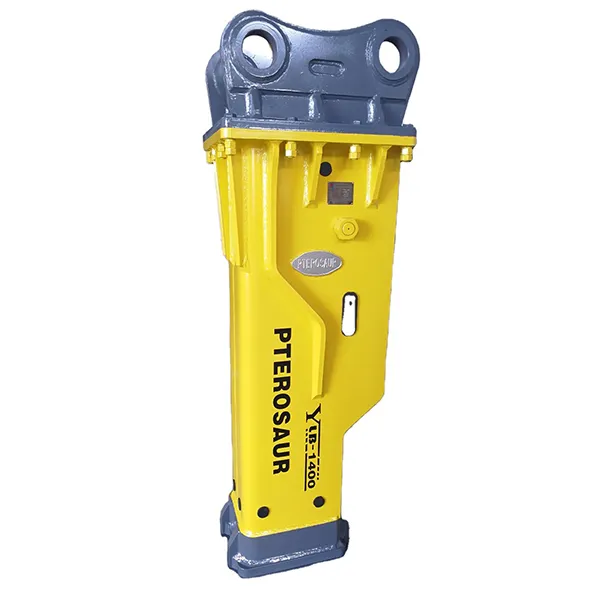
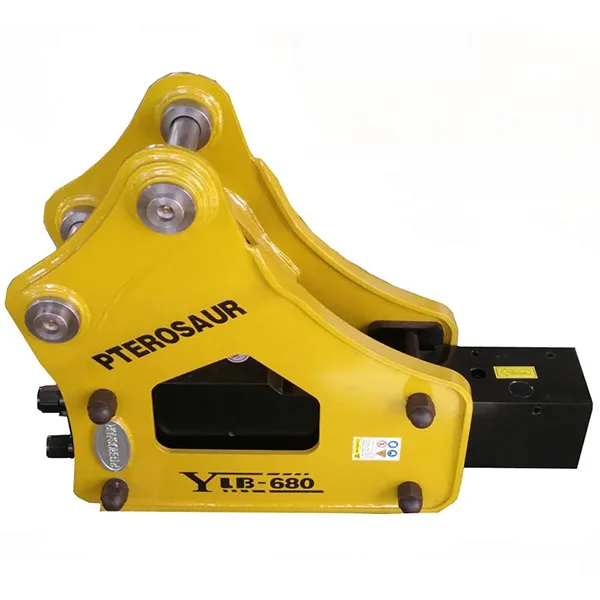
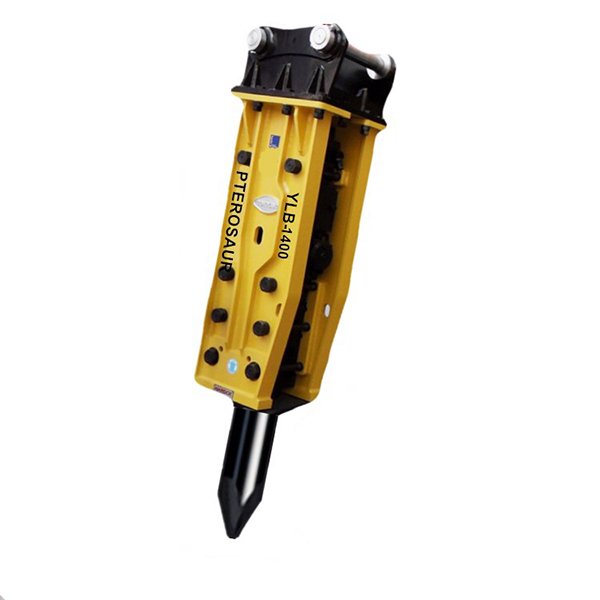
A hydraulic hammer operates by using high-pressure hydraulic fluid to drive a piston that strikes a chisel or moil point into the target material. The repeated high-impact blows fracture the rock, making it easier to remove. Key components include:
• Hydraulic Power Source (excavator or skid-steer loader)
• Piston & Accumulator (amplifies impact force)
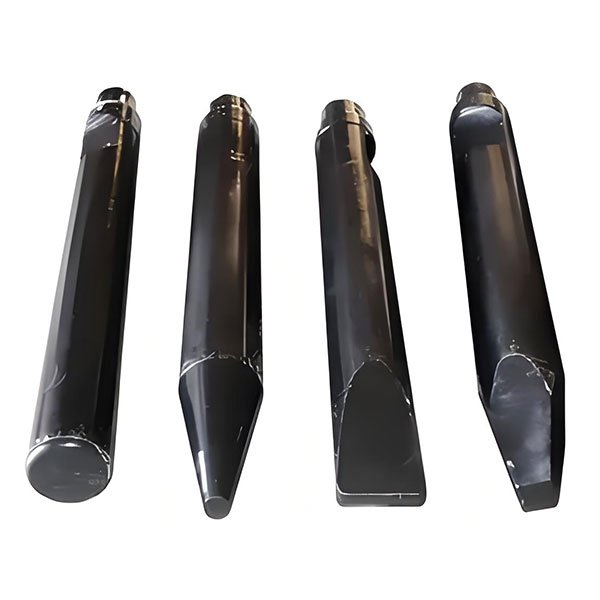
• Tool Bit (selected based on material hardness)
- The force generated by a hydraulic hammer can range from 500 ft-lbs to over 12,000 ft-lbs, depending on the model and carrier machine.
Factors That Determine If a Hydraulic Hammer Can Break Rock
1. Rock Type and Hardness
• Soft to medium rocks (sandstone, limestone) break easily.
• Hard igneous rocks (granite, basalt) require higher-impact hammers.
• Fractured or layered rock breaks faster than solid formations.
2. Hammer Size and Power
- Smaller hammers (500-2,000 ft-lbs) work for light-duty tasks.
•Heavy-duty models (5,000+ ft-lbs) are needed for dense rock.
3. Tool Bit Selection
- Blunt tips(for breaking large boulders).
- Pointed tips(for precision cracking).
4. Operator Skill and Technique
- Proper positioning and angle increase efficiency.
- Overuse can lead to tool wear and reduced effectiveness.
Applications of Hydraulic Hammers in Rock Breaking
- Quarrying & Mining– Breaking oversized rocks for processing.
- Construction & Trenching– Removing bedrock for foundations.
- Roadwork– Fracturing pavement and underlying rock layers.
- Demolition– Breaking reinforced concrete with embedded rock.
Advantages Over Alternative Methods
- Faster than manual methods(e.g., jackhammers).
- More precise than explosivesin urban areas.
- Lower operational costscompared to drilling and blasting.
Limitations
- Not ideal for extremely hard rock(may require drilling first).
- High noise and vibrationcan be a concern in sensitive areas.
- Maintenance-intensive(seals, pistons, and bits wear out).
Conclusion
So, will a hydraulic hammer break rock? Absolutely—but its effectiveness depends on rock type, hammer size, and proper usage. For most construction and demolition tasks, hydraulic hammers offer a reliable, powerful solution for rock fragmentation. Contractors should choose the right hammer class and tool bit to maximize efficiency and minimize downtime.
For those in need of rock-breaking equipment, consulting with a hydraulic hammer specialist can ensure optimal performance for your specific project.